
Deep Roots in Shallow Times
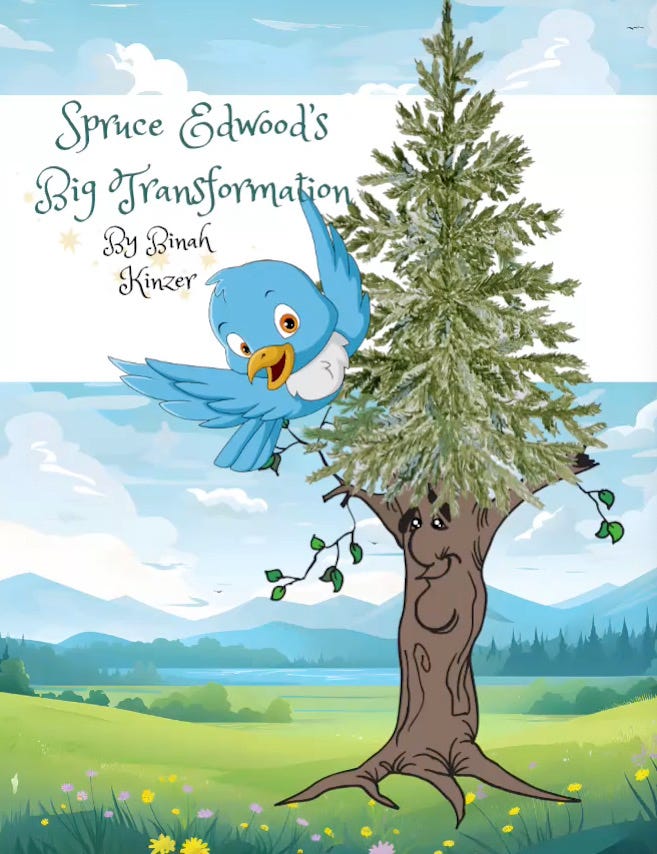
Many parents today feel as though they have been pulled into conversations they never expected to have. They are raising children, building homes, managing schedules, and trying to give their sons and daughters a stable foundation, only to discover that strong and differing opinions about identity, gender, and selfhood are being introduced earlier and earlier, often before children are emotionally mature enough to understand them and before parents even realize those messages have entered the room. They soon realize that a “shock and awe” campaign has descended upon childhood itself—fast-moving, emotionally charged, and designed to overwhelm hesitation before families have had time to think, ask questions, or object. In that atmosphere, many parents do not know where to begin. They sense something is wrong, yet the speed and intensity of the messaging can make even clear thinking people feel disoriented. What should have been thoughtful, family-led conversations when necessary are instead presented as settled truths that children must absorb quickly and without question.
Much of the public discussion around gender identity has centered on what happens after a child has already become confused or distressed about the messaging. Yet I kept returning to another question: what can be done before that moment arrives? How do we help children develop a steady sense of self before they encounter voices telling them they must question everything about who they are? The answer, we know, begins where it always has—at home. Children do not need to be burdened with agenda driven controversy. They need steadiness. They need the reassurance that their bodies are not mistakes–and that trusted adults can be wrong. They need to know that growing up often includes awkwardness, uncertainty, and seasons of self-consciousness, none of which require them to reconstruct who they are.
“They need the reassurance that their bodies are not mistakes–and that trusted adults can be wrong.”
I often think back to a moment from years ago when my daughter, now eighteen, was about four years old. She had a playdate with a little boy around the same age—a rough-and-tumble kid full of intense energy, the kind of boy you instinctively know not to hand a stick to. My daughter happened to be wearing a tutu when he arrived, and before long, it was lying on the floor beside the usual scattered companions of play. At one point, without any prompting from the children, the boy’s mother picked up the tutu and became strangely determined to get it onto her son. She crouched beside him, tugging and coaxing, trying to wrangle him into that tutu as he twisted away from her efforts. She was working up a sweat, while trying to gently and softly convey how pretty it was and repeatedly asking him if he wanted to wear it and that he could if he wanted. She was intent on introducing an idea about how fluid those boundaries could be. The boy wanted no part of it. He kicked, grimaced, hit her and resisted the entire exercise with the full honesty only an aggravated child can display.
Ultimately she didn’t succeed, and the children soon moved on, but I remember standing there thinking how oddly forceful she was. Had he chosen it himself in the natural course of play, it would have meant nothing at all. Children experiment, imagine, and move from one thing to the next without ideology attached to it. What struck me was not the costume, but the insistence. It was the sense that an adult was trying to place an idea into a child that had not arisen from the child himself.
At the time, I did not yet understand where our culture was heading. The thought of these kinds of efforts eventually finding their way into classrooms was not even on my radar. Perhaps the roots of this book began to grow right there on that kitchen floor.
Spruce Edwood’s Big Transformation follows the life of a tree named Spruce Edwood, whose outward appearance changes after a ferocious storm. In the aftermath, he begins to question his true identity when a trusted confidant plants the seed that perhaps he was meant to become something else entirely, mirroring the kind of confusion many children experience whenever life feels unstable. Through friendship, reflection, and gentle guidance, Spruce comes to understand something both simple and profound: There are no mistakes. Noisy voices are ultimately not loud enough to erase his true nature.
I wrote this book because children deserve grounding before confusion finds them. They deserve stories that strengthen rather than unsettle them, and parents deserve tools that open meaningful conversations in a way that is age-appropriate, easy, and accessible. Parents often underestimate the power they have in the face of coordinated aggressiveness. It’s a quiet but mighty resistance. A bedtime story read, a calm conversation in the car, a thoughtful answer to a difficult question, or a household atmosphere where truth is spoken gently and confidently, shaping a child more deeply than any institutional messaging ever will. Children are not looking for new thoughts and commentary about gender. They are looking for confidence, security, and clarity from the people they trust most. No school system, activist campaign, or cultural trend can replace the influence of a parent who is present, engaged, and unafraid to talk about hard things with truth and love. It’s the simple things like teaching gratitude and appreciation for the wisdom of their body and teaching them that identity is not a costume to be changed because the loudest voice in the room is trying to tell them they could or should consider it because it’s a happy option.
My feeling is that we are reaching the point where overreach becomes self-exposure. The further these groups push, the more clearly the contradictions and instability of their messaging begin to unravel. What was once presented with calculated messaging disguised as whispered compassion, is increasingly being examined by ordinary people who pause, scratch their heads, and cannot believe the audacity. In many cases, the movement’s greatest opposition is no longer coming from critics alone, but from the consequences of its own self-promotion and excess.
The goal is not to raise children who diminish others or fear those who think differently. The goal is to raise children who take pride in who they are and who can meet the world with kindness while remaining true to themselves first. The work begins long before the crisis emerges. Each of us has a contribution to this effort in potential. My contribution is a story.
Spruce Edwoods’ Big Transformation is available on Amazon.
Binah Kinzer is a writer and children’s book author living in Northwest Arkansas. Her work includes creative writing and international educational outreach dedicated to making resources on spiritual identity, values, and personal growth accessible across languages and communities. Through her children’s books, she explores themes of identity, resilience, family, and the search for meaning in a changing world.
BRAVO for coming up with a way to preemptively fight against this truly devastating ideology. The other side is relentless. We must also be!!
By the way: BEWARE of Scholastic Book Fairs!!! The time-worn and trusted Scholastic has been fully infiltrated with this trash and they are regularly spewing it out into schools across the country without any parental oversight or knowledge. The current Scholastic book fair catalog has NINETY-FOUR titles promoting transgender identity, pronoun activism, nonbinary ideology, and LGBTQ messaging — sitting on the same red carts our children will browse this autumn. If you want to stand up and be counted, there is a petition you can sign to demand that these raunchy titles be removed by Scholastic: https://cgo.ac/scnksvvby
Congratulations on the publication of your book. I pray that it will be a powerful tool for parents in arming their children against these assaults!
I love your book topic and I agree that this needs to be mandatory reading for all families- Keep it on the bookshelf as your child becomes a teen. Make it a family favorite. One way I think I got my daughter out of this was noticing things in nature- just the sheer unstoppable way that nature does it's thing regardless of human interference, bad weather, etc.... was something I wanted her to notice. Thank you for writing it!